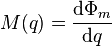
A linear device is any device that changes due to a linear relationship between it's input and output. For example, a 3dB attenuator will always attenuate 3dB of power regardless of power (Of course this doesn't take into account the breakdown voltage of components). Another example is amplifiers in small-signal applications. In small signal applications the output voltage of an amplifier can be modeled by the following equation:
where R0 and R1 are DC Voltage and Voltage Gain of an amplifier. This is typical usage of amplifiers. Unfortunately, Amplifiers won't continue to amplify signals infinitely. This is why with large-signals amplifiers have "non-linear" behavior...
The Non-Linear Amplifier
So what causes these non-linearities? Non-linearity occurs due to device saturation, or the point where the device can no longer provide any more power. In the below graph, you can see an amplifier's input power to output power characteristics. For smaller input power signals, the line is very straight, or linear. As the input power draws near to 0 dBm, you can see it starts to roll off. This indicates that the gain is no longer the same and is in fact dropping as the input power rises.

From Maxim-IC.Com
If the input power continues to rise, eventually you would see a straight horizontal line indicating it has hit saturation. This output power level is known as the Saturation Level of the amplifier (simple enough).
Many non-linear amps can be modeled using a Taylor Expansion style equation:
This is the equation where you can derive the second, third, fourth, etc harmonics. If you were to input a cos(wt) into the equation you would see components of many frequencies (I'll do this math at a later date). This is also where the non-linear figure of merit, 3rd Order Intercept Point (IP3), comes from. If you have a signal Vin = cos(w0t) + cos(w1t) into the equation you would see where the third-order harmonic comes into play. Very interesting math to go through (again...at a later date)
Summary
Granted, this is a very basic explanation of non-linear behavior but it's important to know where it comes from when working with power amplifiers especially. I put this under Component Selection mainly because of the importance this idea is when picking out amplifiers. Be sure that your amplifier is as linear as possible when selecting an amp, otherwise many unexpected problems can arise. If you have specific questions feel free to ask. Enjoy!
------------------------
Justin Coulston
justin.coulston@gmail.com